Sweet Potato Casserole Using Canned Sweet Potatoes Quick Make

- 1.
Why Not Grab a Can? The Underrated Charm of Canned Yams
- 2.
Peel Back the Label: What’s Really Inside That Can?
- 3.
Drain, Don’t Shame: Prep Work That Makes All the Difference
- 4.
Mash It Like You Mean It: Texture Talk & Consistency Control
- 5.
Spices, Sweeteners, and That Secret Whisper of Heat
- 6.
The Marshmallow Controversy: Love It, Hate It, or Upgrade It?
- 7.
Egg-cellent Binders: Custard Science Without the Panic
- 8.
Oven Real Estate: Dish Depth, Material, and That Golden Crust
- 9.
Make-Ahead & Reheat Hacks: Because Holidays Are Chaos
- 10.
10 Common Pitfalls (and How to Dodge ‘Em Like a Pro)
Table of Contents
sweet potato casserole using canned sweet potatoes
Why Not Grab a Can? The Underrated Charm of Canned Yams
Ever stared at a can of sweet potatoes in the pantry and thought, "Ain’t no way this’ll beat fresh yams"? Honey, pull up a chair—we’re ‘bout to flip that script. Sweet potato casserole using canned sweet potatoes ain’t just a time-saver; it’s a texture whisperer, a flavor hug in casserole form. Truth be told, most folks don’t realize that canned sweet potatoes are pre-cooked, peeled, and softened—which means less fuss, more feast. And in a world where your oven’s juggling three pies and Aunt Carol’s cussin’ at the turkey thermometer? Yeah. You need all the help you can get.
Peel Back the Label: What’s Really Inside That Can?
The Syrup Debate & Sodium Surprise
Let’s get real: not all sweet potato cans are created equal. Some come swimmin’ in heavy syrup—great for pie fillings, but way too sweet for a savory-leaning casserole. Others? Packed in water or light syrup, which is exactly what you want for sweet potato casserole using canned sweet potatoes. Pro tip: always flip that can and check the nutrition facts. If “sodium” clocks in over 200mg per serving? Rinse it—or kiss your casserole’s balance goodbye. Yep, that lil’ rinse isn’t just habit; it’s culinary triage.
Drain, Don’t Shame: Prep Work That Makes All the Difference
To Rinse or Not to Rinse? That *Is* the Question
So—should you rinse canned sweet potatoes? Short answer: yes, if they’re not labeled “no salt added” or “in water.” That sticky glaze clinging to the potatoes? It’s sugar + preservatives doin’ the cha-cha on your palate. A quick cold-water bath in a colander cuts the cloying sweetness and gives you cleaner control over your final blend. For sweet potato casserole using canned sweet potatoes, this tiny step keeps your custard base from turning into dessert-before-dinner. And trust us—you want dessert *after* dinner. (Preferably with bourbon in it.)
Mash It Like You Mean It: Texture Talk & Consistency Control
Chunky or Silky? Finding Your Goldilocks Zone
Here’s where soul meets science. Canned sweet potatoes mash smoother than fresh—almost *too* smooth—so a few lumps? They’re not flaws, y’all. They’re character. For that nostalgic, grandma-style sweet potato casserole using canned sweet potatoes, go for a rustic mash: big fork, gentle hand, leave some body. But if you’re vibin’ with a sleek, custardy finish (think: Thanksgiving soufflé), break out the hand mixer—but *only* on low. Overbeat, and you’ll aerate too much, leading to cracks or a gummy mouthfeel. Ain’t nobody got time for sad, rubbery casserole.
Spices, Sweeteners, and That Secret Whisper of Heat
Brown Sugar, Maple, or Molasses? The Sweet Trinity
Now we’re cookin’. Since canned sweet potatoes often carry residual sweetness, balance is *everything*. A classic sweet potato casserole using canned sweet potatoes might call for ¾ cup brown sugar—but if your can was syrup-packed? Dial it down to ½ cup and lean into pure maple syrup (real stuff, not the pancake impostor—$12/bottle or it didn’t happen). Then—the *magic*—a pinch of cayenne. Not enough to burn, just enough to wake up the cinnamon and nutmeg like a soft alarm clock. “Wait, heat in casserole?” Yep. It’s the difference between flat and *flavor-explosion*. And don’t sleep on fresh-grated ginger—adds zing without zingin’ too hard.
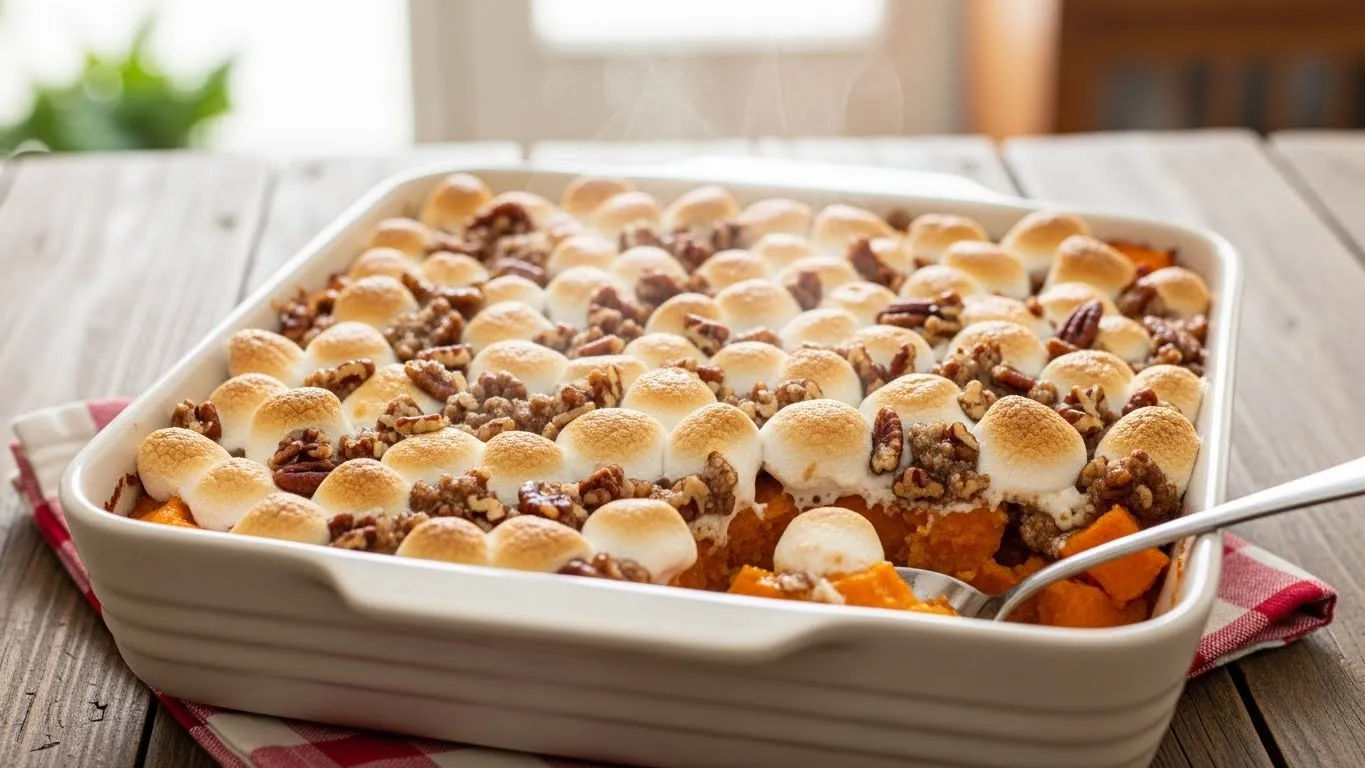
The Marshmallow Controversy: Love It, Hate It, or Upgrade It?
Torched Meringue vs. Toasted Pecan Crunch
Let’s address the elephant in the room—*marshmallows*. Some swear by the gooey, char-speckled cloud. Others? They side-eye it like it’s a suspicious email. For those in camp “nope,” here’s your exit ramp: swap ‘em for a toasted nut-pecan-oat crunch. Think: ½ cup pecans, ¼ cup rolled oats, 3 tbsp brown sugar, 2 tbsp melted butter, pinch of sea salt. Toast it on a sheet pan at 350°F for 8 minutes—*boom*—you got texture, depth, and zero sticky fingers. Either way, layer it *after* your casserole’s baked halfway, then finish under the broiler for 2–3 minutes. Watch it like your ex’s Instagram—*no distractions*.
Egg-cellent Binders: Custard Science Without the Panic
Whole Eggs vs. Yolks Only—The Richness Rundown
Eggs aren’t just binders—they’re the backbone. Two whole eggs? Light, fluffy, forgiving. Four yolks? Decadent, velvety, borderline sinful. For sweet potato casserole using canned sweet potatoes, we lean whole-egg—canned spuds already bring moisture; yolks alone can tip the scale to “dense.” Whisk ‘em in *after* the sweet potatoes are mashed and warm (not hot!), or you’ll get scrambled bits. And hey—if you’re vegan? Flax eggs work (1 tbsp ground flax + 2.5 tbsp water per egg), but add 1 tbsp cornstarch to mimic that custardy set. No one’ll know—promise.
Oven Real Estate: Dish Depth, Material, and That Golden Crust
Why Your 9x13 Glass Dish Is Secretly a MVP
Listen—don’t just dump your batter into any ol’ pan. A **9x13-inch glass or ceramic dish**? That’s the sweet spot. Metal heats too fast, edges scorch before center sets. Glass radiates even heat, lets you *see* the jiggle-test (edges set, center slightly wobbly = done). And depth? At least 2 inches. Too shallow = overflow city when the marshmallow puffs (or the nut topping bubbles like a witch’s cauldron). Pro move: place the dish on a sheet pan—*just in case*. ‘Cause cleanup ain’t part of the holiday vibe.
Make-Ahead & Reheat Hacks: Because Holidays Are Chaos
Freeze Now, Feast Later (Without the Regrets)
Here’s the tea: you *can* prep sweet potato casserole using canned sweet potatoes up to 3 days ahead—and freeze the unbaked version for *six weeks*. How? Assemble everything *except* the topping. Cover tight with foil, freeze. Thaw overnight in fridge, add topping, bake 50–60 mins at 350°F (add 10–15 mins if still chilled in center). Reheating leftovers? 325°F, foil-covered, 20 mins—then uncover, crisp the top 5 more. Microwaving? Only in emergencies—and splash a tsp water first, or it’ll dry out like last year’s fruitcake.
10 Common Pitfalls (and How to Dodge ‘Em Like a Pro)
“I Followed the Recipe… So Why’s It Runny?!”
Ah, the classic casserole crisis. Let’s break it down:
- Skipping the drain/rinse → extra liquid = soup casserole.
- Overmixing → activates starches = gummy texture.
- Cold eggs into warm mash → curdling city.
- Underbaking → jiggle’s cute, but *no set* = sad slices.
- Topping too early → burns while casserole bakes.
For sweet potato casserole using canned sweet potatoes, timing and prep are 80% of the win. The rest? Confidence. And maybe a splash of bourbon in the batter. 😉
Want more inspiration? Swing by Potaday for seasonal favorites, dive into the full archive at Cooking, or check out our crunch-topped twist: Sweet Potato Casserole with Corn Flakes Crunchy Top.
Frequently Asked Questions
Can I substitute canned sweet potatoes for fresh sweet potatoes?
Absolutely—sweet potato casserole using canned sweet potatoes works beautifully as a swap, and often saves 30–40 minutes of peeling, cubing, and boiling. Just remember: canned versions are pre-cooked and softer, so reduce added liquids (like milk or cream) by ~2 tbsp to avoid a runny batter. Also, check if they’re packed in syrup (rinse!) or water (you’re golden).
How do you make sweet potato casserole with canned sweet potatoes?
Start by draining (and rinsing, if needed) two 15.5-oz cans of sweet potatoes. Mash with ¼ cup softened butter, ⅓ cup brown sugar, ½ tsp cinnamon, pinch of nutmeg, 1 tsp vanilla, 2 eggs, and ¼ cup milk—until just smooth. Pour into a greased 9x13 dish. Bake at 350°F for 25 mins, add topping (marshmallows or nut crunch), then broil 2–3 mins till golden. This streamlined sweet potato casserole using canned sweet potatoes clocks in under an hour, start to finish.
Should you rinse canned sweet potatoes?
Yes—if they’re packed in syrup or labeled with added salt. Rinsing removes excess sugar and sodium, giving you full control over the flavor profile of your sweet potato casserole using canned sweet potatoes. If the label says “no salt added” and “in water,” you’re safe to drain and proceed. When in doubt? Rinse. It takes 20 seconds and prevents a cloying or overly salty final dish.
What are some common mistakes to avoid when making sweet potato casserole?
Top blunders in sweet potato casserole using canned sweet potatoes: (1) not draining well → watery mess; (2) overbeating → gluey texture; (3) adding cold eggs to warm mash → scrambled bits; (4) baking topping from the start → burnt before casserole sets; (5) skipping the jiggle-test → underbaked center. Pro fix? Drain thoroughly, mix gently, temper eggs, add topping halfway, and bake until edges are firm but center *lightly* jiggles (like Jell-O, not soup).
References
- https://www.southernliving.com/archive/recipes/desserts/sweet-potato-casserole-history-123456.html
- https://www.foodandwine.com/cooking-tips/canned-vs-fresh-sweet-potatoes-789012
- https://www.eatthis.com/sweet-potato-nutrition-facts-canned-fresh-comparison-345678