Sweet Potatoes on Stove Simple Boil

- 1.
Why Bother with Sweet Potatoes on Stove When You’ve Got a Fancy Oven?
- 2.
Boil ‘Em, Mash ‘Em, Stick ‘Em in a Pot: Timing That Won’t Mess You Up
- 3.
Frying vs. Sautéing vs. Simmering: Which Method Actually Rules?
- 4.
Peel or No Peel? That Is the Real Sweet Potato Dilemma
- 5.
Flavor Boosts That’ll Make Your Sweet Potatoes Sing Gospel
- 6.
Pan Choice Matters More Than You Think (No, Not All Pans Are Equal)
- 7.
Water-to-Sweet-Potato Ratio: The Forgotten Kitchen Rule
- 8.
The “Set It and Forget It” Myth (And Why It Backfires with Sweet Potatoes)
- 9.
Nutrition Talk: Do Stove-Cooked Sweet Potatoes Lose Their Superpowers?
- 10.
From Kitchen Newbie to Sweet Potato Whisperer: Tips That Stick
Table of Contents
sweet potatoes on stove
Why Bother with Sweet Potatoes on Stove When You’ve Got a Fancy Oven?
Ever stood in your kitchen, sweet potato in hand, staring blankly at your stove like it’s some kinda relic from the past? Like, “Ain’t this what microwaves and air fryers were invented for?” But hold up—sweet potatoes on stove ain’t just some old-school method. Nah, it’s the real MVP when you’re short on gear, craving that creamy texture, or just feelin’ like channelin’ your inner homestyle cook. Sweet potatoes on stove give you control—heat, timing, tenderness—all in your palm like a culinary Jedi. And let’s be real: nobody ever burned down their kitchen boilin’ a sweet potato (unless they ghosted the pot, but that’s another story).
Boil ‘Em, Mash ‘Em, Stick ‘Em in a Pot: Timing That Won’t Mess You Up
So—how long does it take to boil sweet potatoes on the stove? That’s the million-dollar Q, isn’t it? Well, if your spuds are medium-sized (think baseball, not golf ball), you’re lookin’ at 20–25 minutes of gentle bubblin’ in a pot of salted water. Smaller chunks? Maybe 10–15. Whole sweet potatoes? Up to 40–45 if you’re goin’ skin-on. Pro tip: poke ‘em with a fork—if it glides in smoother than butter on warm toast, you’re golden. Literally. Sweet potatoes on stove don’t need fancy tricks—just patience and a lid that doesn’t whistle tunes when you’re tryna zone out to a podcast.
Frying vs. Sautéing vs. Simmering: Which Method Actually Rules?
Now, the real tea: which cooking method is best for sweet potatoes? Boiling’s great for mash or purees. Sautéing? Perfect for crispy edges and caramelized goodness—toss ‘em in oil, hit ‘em with heat, maybe a pinch of smoked paprika, and boom: side dish royalty. Frying’s a whole mood, sure, but we’re talkin’ sweet potatoes on stove for weeknight ease, not a deep-fryer date. Simmering in broth? Chef’s kiss for soups or stews. Bottom line: stove-top = versatility. Oven = patience. Air fryer = hype. Stick to your burner if you wanna keep it simple, savory, and stress-free.
Peel or No Peel? That Is the Real Sweet Potato Dilemma
You ever wonder if peelin’ your sweet potato is just extra work? ‘Cause honestly—sweet potatoes on stove taste just fine skin-on, especially if you scrub ‘em clean like you’re washin’ a muddy pup. The skin’s packed with fiber, adds texture, and saves you time. But if you’re makin’ baby food or a silky mash? Yeah, peel it. No judgment. Either way, whether you go au naturel or stripped down, your sweet potatoes on stove will thrive. Just don’t toss the peels—roast ‘em crisp for a weird-but-tasty snack. (Trust us.)
Flavor Boosts That’ll Make Your Sweet Potatoes Sing Gospel
Look—plain sweet potatoes on stove are fine. But “fine” ain’t why you’re here. You want ‘em to slap. So throw in cinnamon sticks while boilin’, or drop a bay leaf in the water for subtle earthiness. After cookin’, hit ‘em with brown butter, maple drizzle, or a sprinkle of cayenne for that sweet-heat yin-yang. Craving savory? Garlic powder, thyme, and a splash of apple cider vinegar’ll do wonders. The stove’s your stage, and those sweet potatoes on stove are the lead vocalist—give ‘em backup singers that don’t overshadow ‘em.
Pan Choice Matters More Than You Think (No, Not All Pans Are Equal)
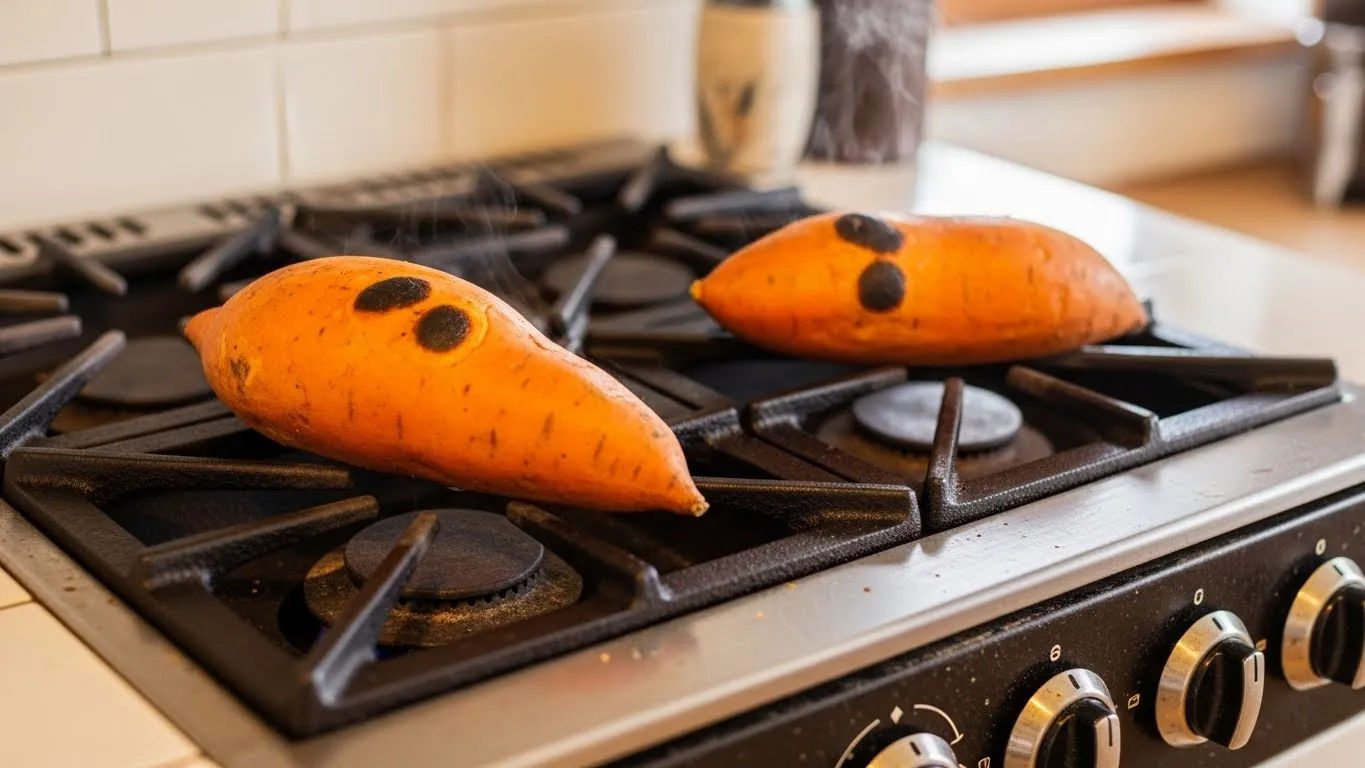
Y’all ever used a flimsy pan that warped mid-boil like it’s doin’ yoga? Don’t. For sweet potatoes on stove, go heavy-bottomed—stainless steel, enameled cast iron, or even a solid nonstick if you’re careful. Thin pans = hot spots = sad, unevenly cooked spuds. And if you’re sautéin’, make sure your pan’s wide enough so the cubes ain’t crowdin’ like subway commuters at rush hour. Crowded sweet potatoes steam instead of sear, and that’s just tragic. A good pan = fewer burnt bits, better browning, and less drama. Ain’t nobody got time for potato trauma.
Water-to-Sweet-Potato Ratio: The Forgotten Kitchen Rule
Yo—how much water do you really need for sweet potatoes on stove? Enough to cover ‘em by an inch, that’s how much. Too little, and the bottom scorches while the top’s still raw. Too much, and you’re waitin’ till next Tuesday for it to boil. Keep it Goldilocks-level: not too much, not too little. And salt that water like you mean it—roughly a teaspoon per quart. It won’t make ‘em salty; it’ll make ‘em *taste* like they were grown in heaven’s backyard. Also, a splash of lemon juice or vinegar in the water? Prevents discoloration and adds a whisper of brightness. Tiny tweak, big payoff for your sweet potatoes on stove.
The “Set It and Forget It” Myth (And Why It Backfires with Sweet Potatoes)
Okay, real talk: sweet potatoes on stove demand a lil’ attention. They ain’t rice cookers. Walk away for 10 minutes, and suddenly your gentle simmer’s a volcano spewing orange lava all over your stovetop. Keep the heat at medium—not high, not low. And stir occasionally if you’re simmering chunks. Whole spuds? Flip ‘em halfway so they cook evenly. Yeah, it’s not “hands-off,” but that’s the beauty. You’re not just heating food—you’re tendin’ to it. Like a gardener with a watering can, but for carbs. And your reward? Perfectly tender sweet potatoes on stove that didn’t stage a kitchen coup.
Nutrition Talk: Do Stove-Cooked Sweet Potatoes Lose Their Superpowers?
Some folks stress that boilin’ zaps nutrients—but nah, not really. Sweet potatoes on stove actually retain most of their beta-carotene (hello, vitamin A!), especially if you cook ‘em with the skin on and avoid overboiling. In fact, gentle heat can make certain antioxidants more bioavailable. Compared to deep-frying? Way healthier. Compared to microwaving? Similar nutrient retention, but stove-top gives better texture control. So if you’re cookin’ sweet potatoes on stove for health *and* flavor, you’re winnin’ both ways. Plus, no weird metallic aftertaste from plastic containers. Win-win.
From Kitchen Newbie to Sweet Potato Whisperer: Tips That Stick
Here’s the deal—mastering sweet potatoes on stove isn’t about perfection. It’s about rhythm. Start with firm, unblemished spuds. Cut ‘em even so they cook together. Taste as you go. And remember: leftovers reheat like a dream. Store ‘em in the fridge for up to 5 days, or freeze mashed versions for future soul food emergencies. And hey—if you’re still nervous, just start small. Boil one. Sauté a few cubes. Mess up? Cool. Even Julia Child dropped a chicken. The journey to sweet potatoes on stove greatness begins with a single peel. Now go—your burner’s callin’. By the way, if you're feelin’ lost, swing by Potaday for more kitchen wisdom, dive into our Cooking section, or check out our deep-dive on Baking Sweet Potatoes at 350 Gentle Heat if you ever wanna compare notes.
Frequently Asked Questions
How long does sweet potato take in a pan?
When you’re cookin’ sweet potatoes on stove in a pan—like sautéing diced pieces—it usually takes 10–15 minutes over medium heat, depending on size. Stir occasionally for even browning. For whole boiled sweet potatoes in a pot (which sits on the stove, so it counts!), plan for 20–45 minutes. The key with sweet potatoes on stove is patience and a fork test.
How long does it take to boil sweet potatoes on the stove?
Boiling sweet potatoes on stove takes about 20–25 minutes for 1-inch cubes, or 40–45 minutes for whole medium sweet potatoes. Always start with cold, salted water, bring to a gentle boil, then reduce to a simmer. Your sweet potatoes on stove are done when a fork slides in with zero resistance—no chew, all smooth.
How is the best way to cook sweet potatoes?
The “best” way depends on your goal—but for creamy texture, easy cleanup, and full control, sweet potatoes on stove (boiled or simmered) are hard to beat. Roasting brings out sweetness, but stove-top is faster and more forgiving for beginners. Whether you’re mashing, cubing, or slicing, sweet potatoes on stove deliver consistent results without needing 45 minutes of oven preheat.
Which cooking method is best for sweet potatoes?
For nutrient retention and versatility, stove-top methods like boiling or sautéing are top-tier for sweet potatoes on stove. Boiling preserves antioxidants better than frying, and sautéing gives caramelization without drying ‘em out. While baking deepens flavor, sweet potatoes on stove win for speed, simplicity, and weeknight practicality—especially if your oven’s packed with last night’s casserole.
References
- https://www.agrifoodatlas.org/sweet-potato-nutrition-stovetop-cooking
- https://www.culinaryresearch.edu/cooking-methods-and-nutrient-retention-in-root-vegetables
- https://www.nutritiontoday.com/beta-carotene-bioavailability-sweet-potatoes
- https://www.southernfoodways.org/traditional-sweet-potato-preparation-techniques