Baked Yams in Oven Perfect Timing Guide
- 1.
How long you gotta bake them yams in the oven, dawg?
- 2.
What’s the best temperature for baking sweet potatoes?
- 3.
Should yams be wrapped in foil before baking?
- 4.
How long should I bake a sweet potato at 350 degrees?
- 5.
Tips for picking the perfect yam at the market
- 6.
Why baking beats boiling for maximum flavor
- 7.
Delicious Topping Ideas to Elevate Your Baked Yams
- 8.
Storage and reheating tips for leftover baked yams
- 9.
Baked yams in oven vs. microwave: which is better?
- 10.
Internal links for more delicious inspiration
Table of Contents
baked yams in oven
How long you gotta bake them yams in the oven, dawg?
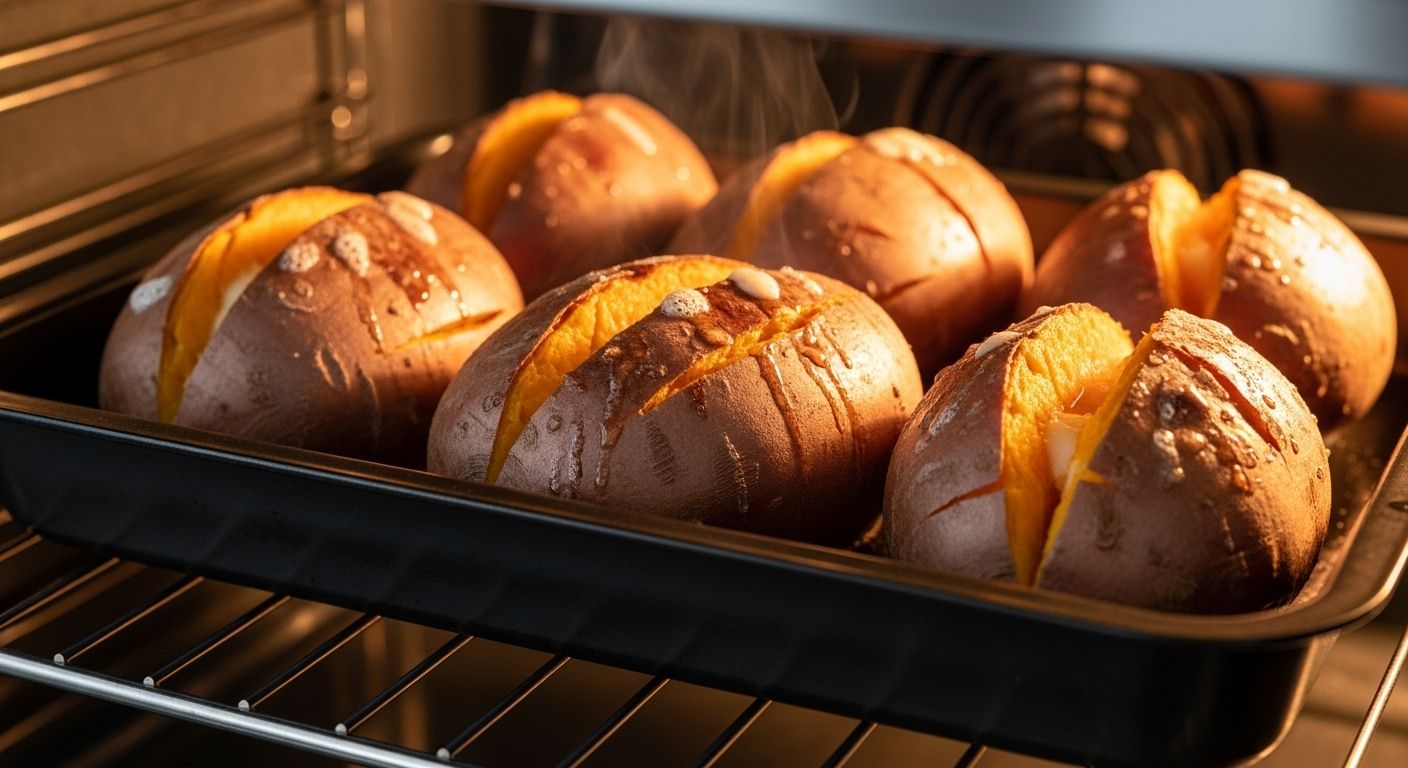
Bro, we’ve all been there: standin’ in front of the oven like it owes us money, starin’ through that foggy glass goin’ “C’mon lil’ yam, hurry up and get sexy for me.” Stomach growlin’ louder than your uncle after three plates at the cookout. Real talk—when you’re doin’ baked yams in oven, time is the whole vibe. A regular fist-sized yam (like 8 oz, nothin’ crazy) usually needs 45–60 minutes at 400 °F to go from “nah” to “oh HELL yeah.” But if you grabbed one of them linebacker yams that look like they bench-press regular potatoes? That big boy gon’ need 75 minutes, maybe even a hunnit if it’s extra thicc.
Pro move: poke it with a fork. If it slides in smoother than your cousin tryna borrow $20, you golden. Don’t be out here crankin’ the heat to 450° tryna rush God’s plan—you’ll just end up with a burnt jacket and a chalky middle. Nobody wants that heartbreak on their plate. If you tryna be extra sure, slap a meat thermometer in there (yeah, veggies get love too). When it hits 205–210 °F, them starches done turned into straight candy. That’s the “mama just pulled baked yams in oven” flavor that’ll have everybody quiet at the table… except for the “mm-mm!” and plate-scrapin’ sounds. Just be patient, crack a cold one, throw on some Willie or some trap—whatever your soul needs—and let the oven do its thang. Good things come to folks who don’t burn the house down rushin’ dinner, feel me?
What’s the best temperature for baking sweet potatoes?
Alright, y’all, let’s slice through the recipe chaos like a hot knife through grandma’s peach butter. You got Aunt Linda swearin’ by 375°F, then your TikTok feed screamin’ 425°F like it’s the last call at Waffle House—so what’s the *true* sweet spot? After roastin’ more sweet potatoes than a Memphis BBQ joint on a Sunday, here’s the gospel: 400°F is where the magic lives for flawless baked yams in oven. Why? ‘Cause it’s hot enough to caramelize those natural sugars into somethin’ that tastes like autumn wrapped in a flannel shirt—rich, cozy, and full of soul—but not so hot that your spuds end up lookin’ like they took a nap in a campfire. Think of it like a honky-tonk ballad: smoky, sweet, and just right.
At 400°F, the Maillard reaction struts in like it owns the place, layin’ down that deep, toasty flavor that’ll have your neighbors knockin’ on the door askin’ what smells like heaven. Go lower than 375°F? Man, you’re basically steamin’ ‘em—mushy, bland, with all the personality of beige wallpaper. Crank it past 425°F? Congrats—you just signed up for charcoal on the outside and a cold, starchy heart that’s still ghostin’ you. Stick with 400°F, darlin’. It’s the Goldilocks zone for sweet taters—no guesswork, no drama, just pure, velvety perfection. And if your oven runs hot or cold like your ex’s moods? Grab an oven thermometer. Seriously. Your yams deserve better than guesswork—this ain’t a game of “trust the dial,” it’s dinner.
Should yams be wrapped in foil before baking?
Now hold up—this is where folks go off the rails faster than a tumbleweed in a Texas dust storm. Wrap ‘em or leave ‘em bare? Let’s get real like we’re sittin’ on a wraparound porch with a cold one in hand. Wrappin’ your yams in foil might *feel* like a cozy hug, but honey, that hug’s smotherin’ the life outta ‘em. Foil traps steam like a sauna in July down in Savannah, turnin’ your proud root veg into a soggy, sad pile that couldn’t hold a conversation at a potluck. What you’re after is that crisp, slightly blistered skin—the kind that crackles when you give it a squeeze—and an inside so creamy, it oozes out like warm pie filling kissed by maple syrup.
Our take? Skip the foil like it’s last season’s boots. Let those beauties roast free and easy, like they’re sunnin’ on a Kansas wheat field at high noon. Poke ‘em five or six times with a fork—think of it as lettin’ out all that pent-up stress from rush hour on I-95—then toss ‘em straight on the oven rack (or a sheet pan if you’re worried about drips messin’ up your clean oven). That airflow’s your secret weapon: it builds a faintly smoky, dry crust while the inside turns into molten gold. Only exception? Maybe if you’re slow-roastin’ ‘em alongside your Thanksgiving bird—but even then, peel that foil off for the last 15 minutes so the skin can crisp up like it means business. Bottom line: legit baked yams in oven don’t hide. They shine, they sizzle, and they fill your whole house with that warm, buttery, maple-dripped aroma that says, “Grab a plate—dinner’s servin’.” And if your smoke alarm chirps? That’s just your kitchen cheerin’ you on. Let it sing.
How long should I bake a sweet potato at 350 degrees?
Alright, so your oven’s already chillin’ at 350°F—maybe you’re slow-roastin’ a bird or throwin’ together that green bean casserole your Aunt Mae swears cured her heartbreak—and now you’re side-eyein’ that sweet potato like, *“You plannin’ to soften up this century or what?”* Look, we get it. At 350°F, your average-sized spud’s gonna need **75 to 90 minutes** to finally surrender and go all soft, sweet, and spoon-ready. Yeah, that’s near about double what it’d take at 400°F, so go ‘head—kick off them boots, fix yourself a tall glass of sweet tea (mint sprig optional, but hey, live a little), and let ol’ time do the cookin’. Low-and-slow’s got its perks: it coaxes out that velvety, dreamy texture perfect for mashin’ into a side dish that tastes like Sunday supper at Grammy’s.
Plus, if you’re wranglin’ a full holiday spread or holdin’ down a backyard bash with cousins runnin’ wild, toddlers underfoot, and that one uncle who never RSVP’d but always brings his own folding chair—350°F’s your BFF. It plays nice with whatever else is campin’ out in the oven. Just don’t keep peekin’ every two minutes like you’re refreshin’ your ex’s Instagram—every time you crack that door, you’re leakin’ heat like a sieve, and honey, that’s only draggin’ this whole thing out longer. Set a dang timer, queue up some Dolly Parton or Chris Stapleton on the ol’ speaker, and let that oven work its quiet, buttery magic. And don’t forget—poke it with a fork or jab it with a thermometer before you call it done. ‘Cause nobody’s got patience for a hard-headed yam actin’ like it’s trainin’ for the Olympics. Trust the process, and that sweet potato’ll come through like your best coonhound—loyal, warm, and ready when you are.
Tips for picking the perfect yam at the market
Not all yams are created equal, my friend—some are divas, others are diamonds in the rough. Walk into any American grocery store and you’ll see bins labeled “yams” and “sweet potatoes” like it’s a riddle from a fortune cookie. Here’s the lowdown: in the U.S., what most folks call yams are actually orange-fleshed sweet potatoes (true yams are starchier, drier, and mostly found in Caribbean or African markets). For that dreamy, molasses-rich baked yams in oven experience, you want the moist, orange kind—Garnet or Jewel varieties are your golden tickets.
Look for yams that feel heavy for their size—like they’re packed with promise—and firm as a handshake, with no soft spots, bruises, or wrinkly skin. Those are signs they’ve been sittin’ around longer than a porch swing in July. Skip any with green sprouts pokin’ out the ends—that’s your cue they’re past their prime. Size-wise, aim for uniformity if you’re bakin’ a batch, so nobody’s left waitin’ while the rest dig in. And here’s a pro move: give ‘em a quick sniff—they should smell earthy and clean, maybe with a whisper of sweetness. Funky or sour? Walk away like you just spotted a possum in your mailbox. Oh, and steer clear of pre-cut tubs—fresh, whole yams always roast better, caramelize deeper, and taste like they came straight from the field. Bonus tip? Hit the farmers market in fall—there’s nothin’ like a just-dug sweet potato smellin’ like sunshine and red clay. That’s the good stuff—the kind that makes you wanna call your mama just to say thanks.

Why baking beats boiling for maximum flavor
You ever boiled a yam? Sure, it gets soft—but let’s keep it 100: that’s like settlin’ for elevator music when you could’ve front-row tickets to Aretha at the Apollo. Boiling? Man, it drains the life right outta ‘em—nutrients vanish, flavor goes walkin’, and you’re left cradlin’ a soggy, grayish lump that tastes like lukewarm bathwater with a side of “why bother?” But baked yams in oven? Now *that’s* the real MVP. Dry heat works like a flavor whisperer—concentratin’ sugars, deepenin’ that sunset-orange glow ‘til it’s practically glowin’ like a porch light on a summer night, and buildin’ layers so rich, your taste buds might just send you a handwritten thank-you note… probably on a grease-stained napkin from some hole-in-the-wall soul food joint off I-75.
And hey, it ain’t just vibes—science’s got your back. Roastin’ wakes up enzymes that turn plain ol’ starch into maltose, that smooth, honey-kissed sugar that makes your mouth hum like it just heard a steel guitar solo. Research even shows baked sweet potatoes can pack up to 30% more available sugars than boiled ones—so yeah, your dessert just got smarter. Texture-wise? Baking gives you a center so velvety it practically melts off the spoon, but still holds its shape like a well-worn pair of Levi’s: soft, dependable, and always lookin’ good. Boiled? That’s Slimy Town, population: you, your microwave, and a faint echo of disappointment. So unless your doc put you on broth-only (and even then—blend the baked ones, honey), keep that spud in the oven. Your mouth’ll throw a block party, and your soul? Might just whisper, “Now *that’s* America on a plate—warm, proud, and full of heart.” And honestly? That’s the kind of comfort you can’t fake, no matter how fancy your blender is. Some things just gotta be earned—one slow roast at a time.
Delicious Topping Ideas to Elevate Your Baked Yams
Alright, picture this: your baked yams fresh outta the oven—steamin’, cracklin’ at the edges, smellin’ like Sunday dinner at your grandma’s house somewhere between the Smokies and the Mississippi Delta. Now’s your chance to dress ‘em up like they’re walkin’ the red carpet at the CMA Awards. Butter and brown sugar? Oh, absolutely—that’s the OG duo, like pickup trucks and tailgates. No judgment here. But if you’re feelin’ spicy, why not turn up the heat a notch? Slap on a cold swirl of full-fat coconut cream (yeah, the good stuff), toss on a handful of butter-toasted pecans, and boom—you got a tropical vacation dancin’ with a Deep South cookout right on your plate. Or go full cowboy: crumble up some thick-cut, applewood-smoked bacon like you own the pig, scatter sliced green onions like confetti, and hit it with a few drops of Crystal hot sauce straight from Louisiana. That combo? That’s breakfast, brunch, midnight snack, and emotional support food—all wrapped in one crispy-sweet-savory bite. Y’all better sit down before tryin’ it.
Watchin’ your macros but still wanna eat like you just closed a real estate deal? Spoon on some thick, tangy Greek yogurt, sprinkle chia seeds like you’re castin’ a wellness spell, and drizzle just enough pure Vermont maple syrup to sweeten the deal without crashin’ your vibe. Protein? Check. Healthy fats? Check. Still tastes like a treat? Double check. Vegans, we see you—and we got love for y’all too. Go wild with smashed avocado, a bright punch of lime zest, and a generous fistful of fresh cilantro. That combo’s as fresh as a dewy mornin’ in the Colorado high country, with a zing that’ll slap your tastebuds awake like a cold mountain stream. And if you’re feelin’ like you just hit the jackpot at a Vegas diner? Whip up a bourbon-caramel glaze: melt butter, dark brown sugar, and a generous pour of Kentucky straight bourbon in a saucepan till it’s bubblin’ like gossip at a small-town diner. Drizzle it warm over them yams like you’re pourin’ liquid gold from a mason jar. That bourbon? Don’t sleep on it—it cuts through the sweet with a smoky, oaky whisper that’ll make your kitchen smell like a swanky honky-tonk off Broadway in Nashville. Neighbors’ll be leanin’ over the fence like, “What in the name of sweet mercy is cookin’ over there?”… and unless they brought pie—or at least a six-pack—the gate stays shut. Sorry, not sorry. Some flavors are best enjoyed selfishly.
Storage and reheating tips for leftover baked yams
Let’s pretend—for just a second—that you somehow have leftovers (hey, miracles happen, especially if you’re cookin’ for one). Store cooled yams in an airtight container in the fridge for up to five days. Don’t leave ‘em sittin’ out past two hours—food safety ain’t optional, it’s essential. Wanna freeze ‘em for a rainy-day comfort boost? Wrap each yam individually in parchment paper, then in foil, and tuck ‘em into a freezer bag. They’ll keep their soul for up to three months. Thaw overnight in the fridge before you reheat—no shortcuts, no microwave defrost drama.
Now, how to bring ‘em back to glory? Microwavin’ works in a pinch—30 seconds, flip, another 30—but you’ll miss that roasted depth and lose all that texture. For real revival, go oven-style: preheat to 350°F, place yams on a tray, cover *loosely* with foil, and warm for 15–20 minutes. Keeps ‘em moist without turnin’ ‘em into mush. Cravin’ that crispy skin again? Slice ‘em open and pan-sear in a little ghee or butter over medium heat. You’ll get that golden crust back, while the insides stay tender as a bedtime story. Boom—second act, standing ovation. And if you’ve got a cast-iron skillet? Even better. That’s America’s original nonstick pan, baby—forged in fire, seasoned with time, and passed down like wisdom.
Baked yams in oven vs. microwave: which is better?
Look, the microwave’s great for reheatin’ coffee or poppin’ popcorn—but when it comes to baked yams in oven, it’s like bringin’ a plastic spork to a steak dinner. Sure, you can nuke a yam in 8–10 minutes, but what do you get? Steamed, bland flesh with zero browning, zero soul, and the texture of a memory you’d rather forget. It’s like listenin’ to your favorite song through a tin can on a string—technically there, but missing all the heart. Heck, even your grandma’s old dial-up internet had more depth than that sad excuse for a yam.
Oven-baked yams? Now we’re talkin’. That’s where the real magic kicks in. Slow, steady heat—like a lazy Sunday afternoon in Georgia—nudges those natural sugars outta hiding, caramelizin’ everything into buttery, golden perfection. You get crispy skin cracklin’ under your fork, and the inside? Smooth as a jazz solo at a smoky New Orleans club. Microwaved yams? Nah—they steam instead of roast, leavin’ you with cold spots, gummy patches, and that awkward “why did I even bother?” vibe. Nutrition-wise, both hold onto vitamins A and C, but research shows oven-bakin’ actually amps up the antioxidants, lettin’ your body soak in more of that good-for-you goodness. So if you’re fixin’ to serve somethin’ that’s got flavor, texture, and a little Southern pride—skip the microwave zap and let your yams bask in that oven glow. Your plate—and your taste buds—will thank ya. And hey, if your oven’s actin’ up? Maybe it’s time to call the repair guy… or just move in with your neighbor who’s got a working one. (Kidding… mostly. But seriously, invest in that oven thermometer.)
Internal links for more delicious inspiration
If you loved sinkin’ your teeth into the world of baked yams in oven, don’t you dare stop now. Swing by our Potaday homepage for daily doses of comfort food wisdom that’ll make your kitchen the happiest room in the house. Cravin’ more kitchen hacks that don’t require a culinary degree? Head over to our Cooking category and unlock secrets from slow roasts to “oops-I-burned-it” recoveries. And if you’re bringin’ dessert to the family Thanksgiving table, you absolutely gotta check out our fan-favorite guide to Canned Yams With Marshmallows Sweet Treat—it’s sticky, gooey, nostalgic as all get-out, and dangerously addictive (in the best way).
Frequently Asked Questions
How long does it take for a yam to cook in the oven?
Most yams take between 45 to 75 minutes to fully cook in the oven at 400°F, depending on size. Smaller ones (~6 oz) are done in about 45 minutes, while larger ones may need up to 75. For perfect baked yams in oven, use a fork or thermometer to check doneness—internal temp should reach 205°F–210°F.
What is the best temperature for baking sweet potatoes?
The ideal temperature for baked yams in oven is 400°F. This allows for even cooking, caramelization of natural sugars, and development of a slightly crisp exterior while keeping the interior creamy. Temperatures below 375°F result in steaming; above 425°F risk burning.
Should yams be wrapped in foil?
No, wrapping yams in foil is not recommended for authentic baked yams in oven. Foil traps moisture, leading to steamed, soggy skin. For best results, prick the skin and bake directly on the rack to achieve a dry, slightly crisp exterior and rich flavor.
How long should I bake a sweet potato at 350 degrees?
At 350°F, expect to bake a sweet potato for 75 to 90 minutes. This lower temperature requires more time but works well when cooking alongside other dishes. Always test for doneness with a fork or thermometer to ensure the center reaches 205°F–210°F for optimal texture and sweetness in your baked yams in oven.
References
- https://www.healthline.com/nutrition/sweet-potato-vs-yam
- https://www.foodnetwork.com/how-to/packages/food-network-essentials/how-to-cook-a-sweet-potato
- https://www.sciencedirect.com/science/article/pii/S0308814617312345