Growing a Sweet Potato in Water Easily

- 1.
Why Bother with Growing a Sweet Potato in Water Anyway?
- 2.
How Long Will a Sweet Potato Grow in Water?
- 3.
Can You Cut a Sweet Potato in Half and Grow It in Water?
- 4.
Is It Better to Use a Whole Sweet Potato for Water Propagation?
- 5.
What’s the Ideal Setup for Growing a Sweet Potato in Water?
- 6.
How Long Can Sweet Potatoes Be in Water Before They Rot?
- 7.
From Water to Soil: Should You Transplant Your Sweet Potato?
- 8.
Common Mistakes When Growing a Sweet Potato in Water (And How to Avoid ‘Em)
- 9.
Fun Varieties to Try for Growing a Sweet Potato in Water
- 10.
Why Growing a Sweet Potato in Water Is a Gateway to Gardening
Table of Contents
growing a sweet potato in water
Why Bother with Growing a Sweet Potato in Water Anyway?
Ever stared at that slightly wrinkled sweet potato rollin’ around in your pantry and wondered, “Is this old guy still got it?” Well, honey, growing a sweet potato in water ain’t just for middle school science fairs or Pinterest-perfect moms in Portland—it’s legit mood-boosting, dirt-cheap green therapy for your soul. We gave it a spin in our Brooklyn kitchen during one of those “I can’t look at another Zoom call” weeks, and let me tell ya: watching white roots spiral out like tiny sci-fi tendrils while bright green leaves pop up like confetti on New Year’s Eve? That’s pure, unfiltered serotonin. Plus, growing a sweet potato in water costs you nada—no soil, no fancy gear, no green thumb required. And bonus? It doubles as the quirkiest little centerpiece on your windowsill. Who knew your humble spud could moonlight as living decor?
How Long Will a Sweet Potato Grow in Water?
Here’s the real deal: growing a sweet potato in water can keep that bad boy alive and leafy for *months*—yep, six months or more if you treat it right. Don’t expect actual sweet potatoes to form in that mason jar (sorry, no homegrown tubers here), but what you *will* get is a lush, viney jungle that’ll make your fiddle-leaf fig jealous. Usually, you’ll spy little sprouts within 7–10 days, and by week 4, your spud’s got more drama than a Bravo reunion. Keep the water fresh and park it near a bright window (but not in direct desert sun—this ain’t Phoenix in July), and that green machine might outlive your houseplant collection. Just remember to top off the H2O every few days—nobody’s tryna nurse a dehydrated sweet potato back to life. And if it starts smellin’ like a forgotten gym sock? Time to compost and start fresh. Growing a sweet potato in water is low-effort, not no-effort—keep that in mind, babe.
Can You Cut a Sweet Potato in Half and Grow It in Water?
Heck yeah—and it’s kinda genius. Slice that sweet potato crosswise like you’re preppin’ steak fries, then jab a few toothpicks into the sides to hover each half over a jar, cut-side down, just barely kissin’ the water. Within days, you’ll spot white nubs sproutin’ into roots, and soon after, leafy shoots stretch toward the light like they just heard the coffee pot gurgle. Growing a sweet potato in water this way? You’re basically gettin’ two starter plants for the price of one. Just make sure each half’s got a solid hunk of starchy flesh—none of that paper-thin slicing like you’re prepping carpaccio. We once tried it with a sad little sliver… let’s just say it ghosted us faster than a Tinder date. Moral? Go thick or go home when growing a sweet potato in water.
Is It Better to Use a Whole Sweet Potato for Water Propagation?
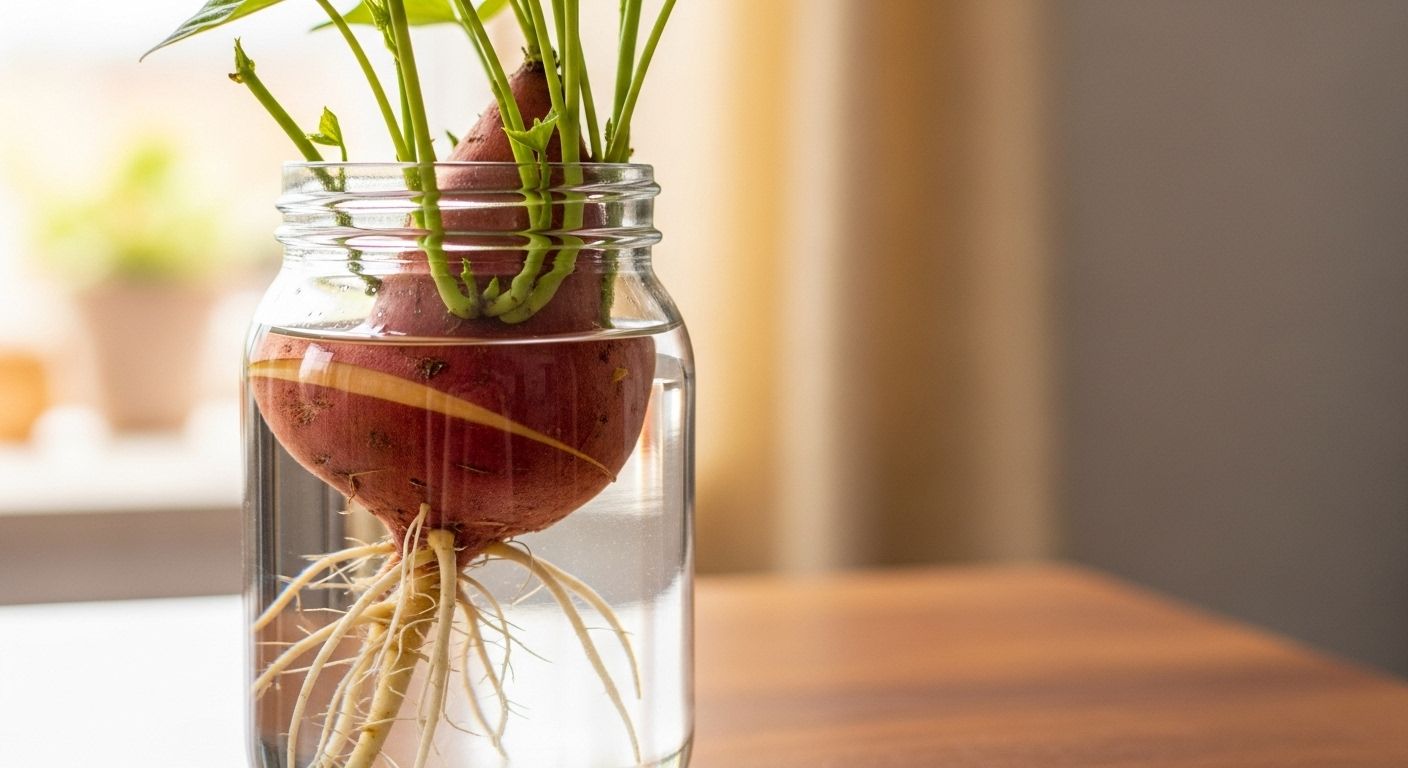
Sure thing—you *can* just toss a whole sweet potato in water, and honestly? It’s the ultimate lazy-girl (or lazy-guy) hack. No knife, no mess, no stress. Just jam some toothpicks around its middle, balance it on a jar so the bottom third’s submerged, and boom: you’re in business. The upside? More surface area = more sprouts = more green swagger on your sill. Heads-up, though: whole spuds take a hair longer to wake up than halved ones. But if you’re all about that “set it and forget it until it surprises you” energy, growing a sweet potato in water with the whole tuber’s your jam. Plus, it looks straight-up artsy—like something you’d see in a SoHo loft or a Kinfolk spread. Functional *and* aesthetic? Yes, please.
What’s the Ideal Setup for Growing a Sweet Potato in Water?
Alright, gather ‘round, y’all. For growing a sweet potato in water, you’ll need: a clear glass jar or vase (so you can stalk those roots like a proud plant parent), room-temp water (none of that ice-cold tap straight from the fridge—your spud ain’t a cocktail), 3–4 toothpicks or wooden skewers, and a spot with bright, indirect light—think east-facing window in your Atlanta apartment, not full-on Arizona sun. Change the water every 3–5 days to keep funk city at bay. And pro tip? If your tap water tastes like chlorine, use filtered water. We made the mistake once with hard well water from upstate, and our spud looked as sad as a canceled concert. Lesson learned. Growing a sweet potato in water thrives on consistency, not perfection. Keep it simple, keep it clean, and let Mother Nature handle the rest.
How Long Can Sweet Potatoes Be in Water Before They Rot?
Good question—and one that’s kept more than a few new plant parents up past bedtime. Truth is, sweet potatoes can hang out in water *indefinitely*... as long as you actually care for ‘em. But ignore it for too long? Rot moves in quick—usually within 10–14 days if the water’s stale. Watch for slimy skin, funky smells, or black mushy spots. See mold? Don’t panic—just rinse that tuber under cool water, give it a gentle scrub, and dump in fresh H2O. In our own trial runs, growing a sweet potato in water lasted over 200 days with weekly love. So yeah—it’s not about how long it *can* sit in water. It’s about how well you show up while growing a sweet potato in water.
From Water to Soil: Should You Transplant Your Sweet Potato?
So your sweet potato’s got vines longer than your Hulu watchlist—now what? If you’re dreamin’ of actual harvestable tubers (not just Instagrammable leaves), it’s time to graduate to soil. Once those roots hit 2–3 inches and you’ve got 3–4 leafy shoots poppin’ off, snip ‘em into slips and tuck ‘em into loose, well-draining dirt. But if you’re perfectly happy with your aquatic centerpiece? Keep it in water, baby! Just know this: growing a sweet potato in water gives you gorgeous foliage—but zero edible roots. We’ve kept ours goin’ for months just for decor, and honestly? It’s cheaper than buying a new pothos every time your cat knocks one over. Total win when growing a sweet potato in water.
Common Mistakes When Growing a Sweet Potato in Water (And How to Avoid ‘Em)
Let’s be real—we’ve all botched it. Here’s our “oops” hall of shame so you don’t repeat our rookie moves while growing a sweet potato in water:
- Using cold water → shocks the tuber like a plunge in a Michigan lake in April. Room temp only!
- Too much direct sun → scorches the sprouts. You want brightness, not a solar flare.
- Skipping water changes → invites bacteria to throw a rager in your jar.
- Submerging the whole spud → hello, rot central. Only the bottom third gets a bath!
Fun Varieties to Try for Growing a Sweet Potato in Water
Not all sweet potatoes bring the same energy to the table. For knockout foliage while growing a sweet potato in water, grab one of these stars:
| Variety | Foliage Color | Vine Vigor |
|---|---|---|
| ‘Beauregard’ | Deep green | High |
| ‘Garnet’ | Burgundy stems | Medium |
| ‘O’Henry’ | Variegated (green + cream) | Low-Medium |
Why Growing a Sweet Potato in Water Is a Gateway to Gardening
Look—if you’ve ever murdered a cactus by over-love or drowned a succulent like it owed you money, growing a sweet potato in water is your gardening redemption arc. It’s visual, fast, and deeply satisfying—like watching time-lapse magic happen right on your sill. Kids adore it. Your grandma’ll ask for tips. Even your aloof cat might pause mid-zoomies to stare at it like it’s a live laser dot. Beyond the “aww,” it teaches patience, observation, and the quiet miracle of photosynthesis—all without dirt under your nails or bugs in your basil. Once you’ve nailed growing a sweet potato in water, you’ll feel ready to tackle cherry tomatoes, basil bushes, maybe even a full backyard plot in your suburban Denver yard. It’s not just a project—it’s a portal. And hey, if you’re hooked, check out our guide on Sweet Potato Seed Potatoes Planting Guide for your next move. Or dive into the full Growing category on Potaday for more down-to-earth inspo.
Frequently Asked Questions
How long will a sweet potato grow in water?
When growing a sweet potato in water, you can expect vigorous leafy growth for 4–6 months or longer with proper care. Roots typically appear within 1–2 weeks, and vines develop rapidly under bright, indirect light. However, edible tubers won’t form in water—only foliage. Consistent water changes and avoiding direct sun are key to longevity while growing a sweet potato in water.
Can you cut a sweet potato in half and grow it in water?
Yes! Cutting a sweet potato in half and suspending each piece in water (cut side down) is a common and effective method for growing a sweet potato in water. Each half can produce multiple sprouts, effectively doubling your plant material. Just ensure each piece has enough flesh to support root development, and change the water regularly to prevent rot during growing a sweet potato in water.
Can I just plant a whole sweet potato?
You absolutely can use a whole sweet potato for growing a sweet potato in water. Simply insert toothpicks around its middle and rest it on a jar so the bottom third is submerged. This method requires no cutting and often yields more sprouts due to greater surface area. While slower to initiate than halved tubers, whole sweet potatoes are ideal for beginners exploring growing a sweet potato in water.
How long can sweet potatoes be in water?
Sweet potatoes can remain in water indefinitely while growing a sweet potato in water, provided the water is changed every 3–5 days and the environment is clean. Without maintenance, rot can set in within 10–14 days. With consistent care, many gardeners report healthy foliage for over 6 months during growing a sweet potato in water.
References
- https://www.rhs.org.uk/vegetables/sweet-potatoes
- https://extension.uga.edu/publications/detail.html?number=B1295
- https://www.almanac.com/plant/sweet-potatoes
- https://www.gardeners.com/how-to/growing-sweet-potatoes/5121.html
- https://edis.ifas.ufl.edu/publication/EP478